

A customer wants your EcoVadis score, the board wants B Corp and ISO 37011 is on its way. Twelve frameworks compared, and how to build evidence once that works for all of them.
Earth Day 2026: The Green Skills Are Already There. Here's How to Find Them.
Green jobs are one of the fastest-growing areas of the economy. On Earth Day 2026, here's why the talent gap is smaller than it looks, and how organisations can start bridging it.
Earth Day is a good excuse to celebrate what's actually going well.
Published on
May 11, 2026
Contributors

James Pravato

Includability
Inclusive Community

Table of Content
Earth Day is a good excuse to celebrate what's actually going well.
The green economy is growing. Investment in clean energy, sustainable infrastructure, and climate-focused businesses is accelerating. More people than ever want to work on solving the biggest challenges we face.
There's a gap, though. LinkedIn data shows that job postings requiring at least one green skill are growing twice as fast as the workers who have those skills.
But here's the more hopeful read: the skills are already there. They just need connecting.
Most green talent doesn't have a green job title
Efrem Bycer, who leads workforce and climate policy partnerships at LinkedIn, made this point clearly in a recent Earth Day conversation: the green economy still needs marketing, finance, and operations people. Those skills don't stop mattering because the sector changes.
A geothermal company in the US built a significant part of their team from oil and gas workers, because energy expertise travels. A solar asset management firm that kept struggling to hire eventually looked beyond the obvious talent pool and found capable people in roles they'd never considered. LinkedIn's own data shows the majority of green hires today have green skills but not green titles.
The question isn't whether the skills exist. It's whether organisations can see them clearly enough to act.
Green Skills Gap
The knowledge gap inside organisations
Where many organisations get stuck isn't talent. It's understanding.
Sustainability leads are often stretched. HR teams are juggling multiple agendas. Leaders want to do the right thing but aren't always sure what that looks like in practice for their industry, their workforce, or their supply chain.
That's a knowledge and community problem more than anything else. And it's solvable.
How Includability is helping
Sustainability and Impact is one of Includability's six core pillars. Every Committed Employer gets an independent expert partner call with a sustainability practitioner working in the field every day. Not an audit. A proper conversation about where you are, what's already working, and where to focus next.
We're also have two spaces for this.
Community Support Groups run monthly and are free to join. Each session is an hour. Three expert speakers, a range of topics, and a chat feed where you can drop questions as they come up. Come with a coffee, camera on or off, and just be curious. No agenda, no pitch. It's genuinely just a useful hour.
You can sign up for the next session here: Eventbrite
Includability Academy, launching at incademy.co.uk in 2026, brings expert-led learning across all six pillars to the people doing the work every day. Sustainability and B Corp are both covered. It's built for practitioners, not theorists.
A good day to take stock
If your organisation has sustainability commitments but isn't sure whether your people have the knowledge to deliver on them, that's exactly the conversation worth having.
You don't have to have it alone. Come and join the community at weareincludability.co.uk, or sign up for a Community Support Group and start there.
The skills and the passion are already in the room. Sometimes you just need the right people around you to help you see it.
Includability is an expert-led system that helps organisations move from good intentions to clear strategy across six pillars: Diversity & Inclusion, Mental Health, Wellbeing, Sustainability & Impact, Talent Management, and Leadership & Governance.
Earthday Website
Related resources & events
JEDI
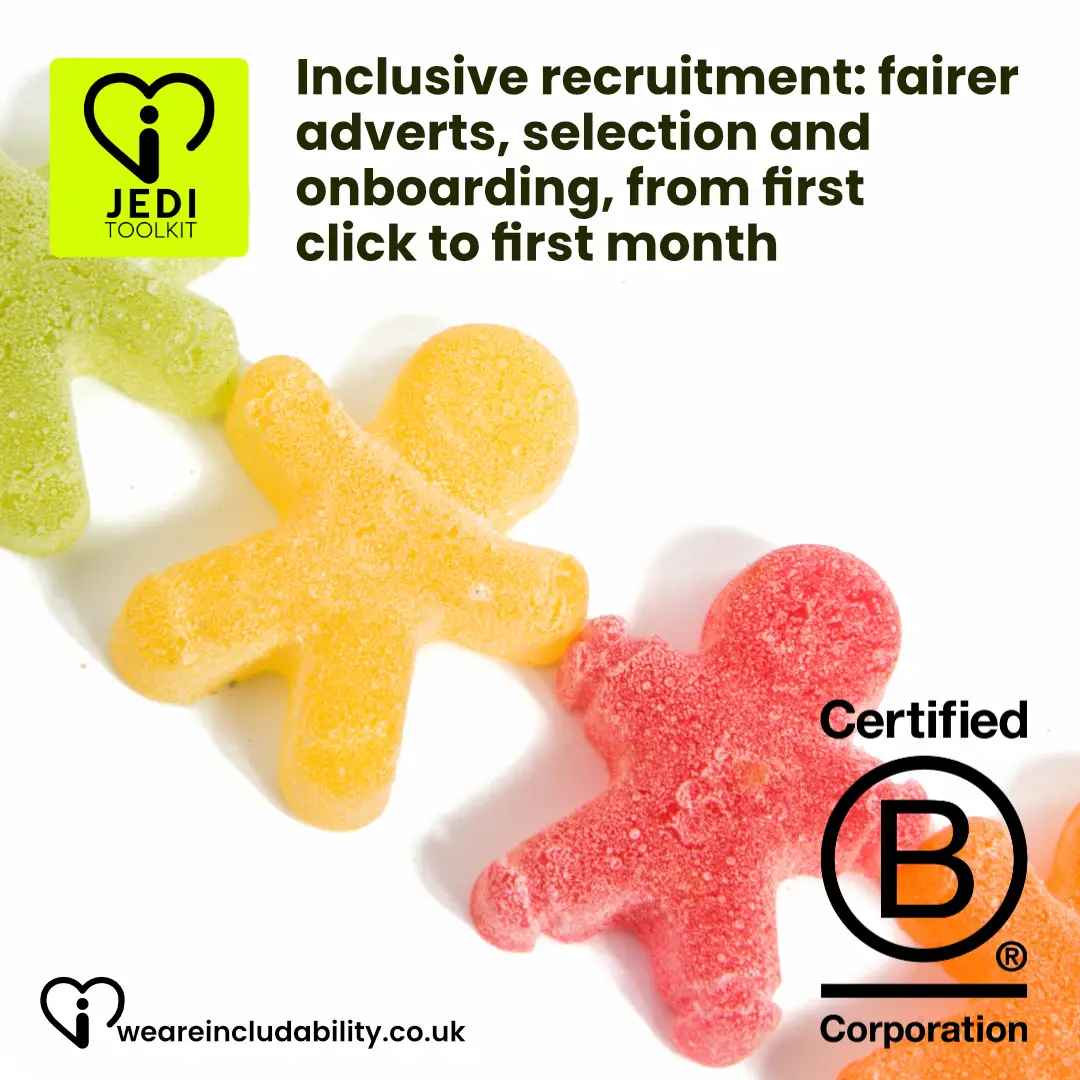
Inclusive recruitment: fairer adverts, selection and onboarding, from first click to first month
Every stage of hiring can widen your talent pool or quietly narrow it. The Inclusive Hiring, Onboarding and Induction module gives you inclusive job adverts, fairer selection methods, an onboarding checklist and guidance on AI in recruitment, from the first advert to the first month in the job.
Sign up for our newsletters
We have an employer and Job seeker newsletter giving you all the latest information in one easy and digestible email. Sign up today for news and job advice straight to your inbox.