

The talent you need next is often already working for you. The Talent Pooling and Pipelines module helps you find it, develop it fairly and make sure progression is open to everyone, not just the people already in the right conversations.
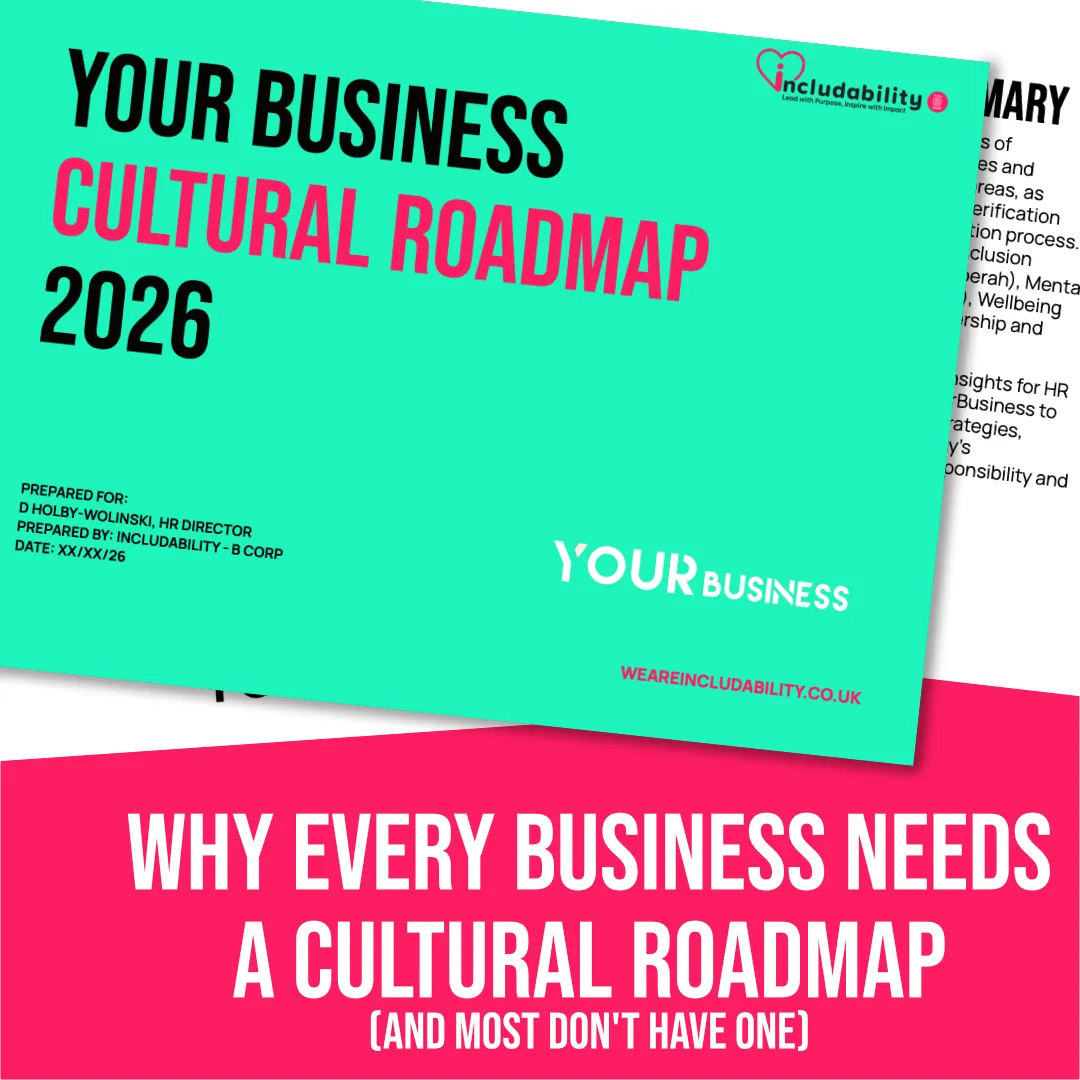
Why Every Business Needs a Cultural Roadmap (And Most Don't Have One)
Most organisations are doing more on culture than ever, but still can't answer a simple question: what's actually working? A cultural roadmap closes that gap. It's a board-ready, evidence-based view of where your culture stands across every pillar, what's already working, where the gaps and risks are, and what to do next, in order.
Building a Roadmap for your culture has never been more important
Published on
October 8, 2026
Contributors

James Pravato

Includability
Inclusive Community
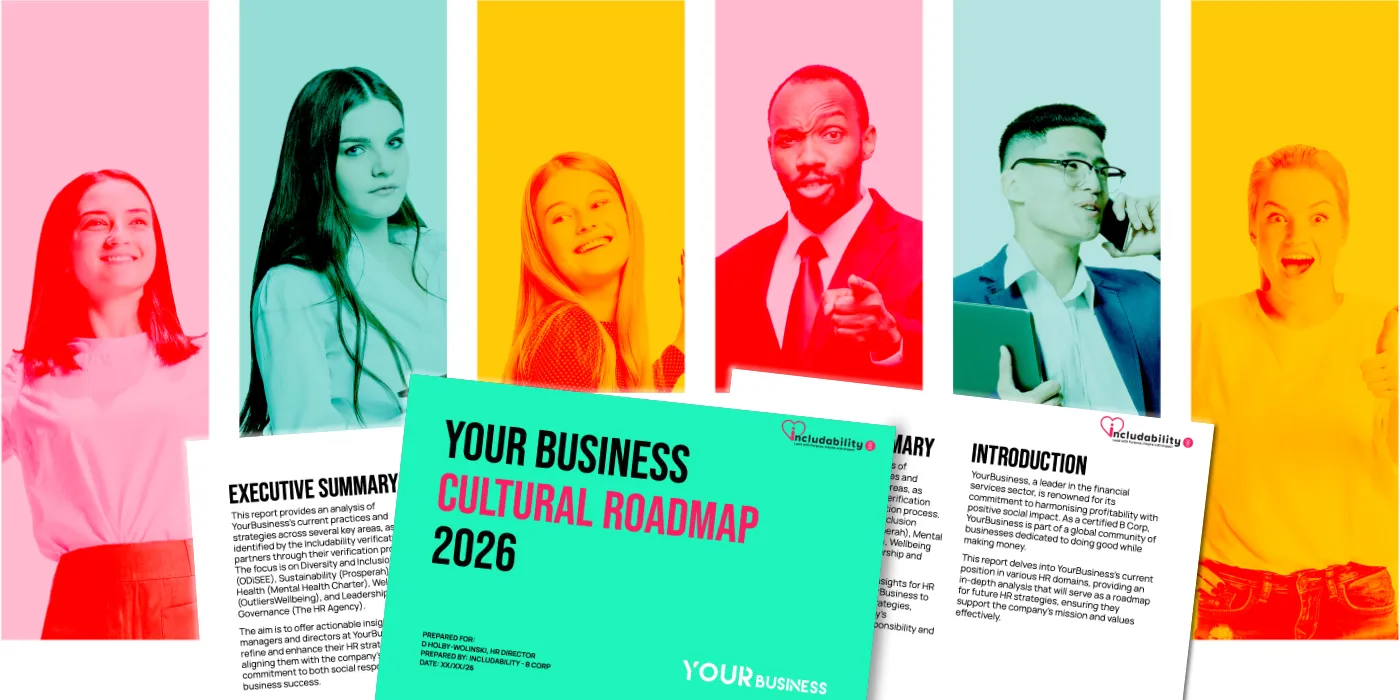
Table of Content
Most organisations are doing more on culture than they ever have. More initiatives. More policies. More awareness days, more surveys, more good intentions.
And most of them still can't answer a simple question: what's actually working?
That's the gap a cultural roadmap closes. Not another initiative. A single, evidence-based view of where your culture is now, where the gaps are, and what to do next.
This is what we build at Includability. It's our core product, and it's worth explaining properly, because "culture roadmap" gets used loosely, and most versions of it stop short of being useful.
What a cultural roadmap actually is
A cultural roadmap is a board-ready document that does four things:
- It shows you where you are now, across the full picture of workplace culture, not just diversity and leadership.
- It identifies what's already working, so you stop second-guessing the things you've got right.
- It exposes the gaps. These are the areas where there's activity but no evidence, or no activity at all.
- It gives you a prioritised direction your leadership team can actually act on.
That last point matters. A roadmap that lists everything you could do isn't a roadmap. It's a wish list. The value is in the sequencing: knowing what to do first, what can wait, and why.
The problem most businesses are sitting with
Here's the pattern we see again and again.
The work is happening. People care. There's a wellbeing programme, an EDI policy, a leadership development plan, maybe a sustainability commitment. Each piece is reasonable on its own.
But nobody can join it up. There's no single narrative. The board asks how the culture is doing and the honest answer is "we think it's fine, but we can't really show you."
That's not a failure of effort. It's a failure of structure. Initiatives get built in silos, owned by different people, measured in different ways, if they're measured at all. And without a way to bring them together, you end up with a lot of activity and very little clarity.
You've done the work. You just can't prove it.
Why internal reviews don't give you the full picture
When organisations do try to take stock, they usually do it internally. Someone on the People team pulls together what's happening and writes it up.
The intention is right. The problem is bias.
The people closest to the work are the least able to see it clearly. They know the context, the history, the reasons something didn't get done. That context is useful, but it also softens the assessment. Internal reviews tend to mark their own homework generously. Not dishonestly, just in a a human way.
An external review removes that. Someone with no stake in the internal politics, no history to defend, and genuine expertise in the area can look at what's there and say plainly: this is strong, this is a gap, this is a risk.
It's the difference between "we feel like we're doing well on mental health" and "here's where your mental health provision actually sits, and here's what's missing." One is reassuring. The other is useful.
"Our cultural roadmaps make that commercial connection between you and your board, while supporting the individuals doing the work. Internal review often doesn't show the commercial value of what's been put in place, so it gets dismissed as nice to have rather than need to have. An unbiased view is what changes that."
— James Pravato, CEO @ Includability
Why you can't just look at EDI and leadership
This is the part most culture work gets wrong.
When companies assess their culture, they tend to look at two things: diversity and inclusion, and leadership. Those are the visible ones. They're the ones the board asks about and the ones that show up in the headlines.
But culture isn't two things. The areas that actually determine whether a workplace performs sit across a much wider field, and they're connected.
At Includability we work across six pillars:
- Diversity & Inclusion. Representation, equity, belonging, inclusive hiring.
- Mental Health. Prevention, manager capability, psychological safety, burnout risk.
- Wellbeing. Physical, financial and social wellbeing, beyond EAPs and awareness days.
- Sustainability & Impact. Environmental responsibility, community impact, B Corp alignment.
- Talent Management. Recruitment, retention, development, succession, employer brand.
- Leadership & Governance. Board accountability, governance structures, culture from the top.
Look at only two of these and you get a distorted picture. A business can have a strong EDI policy and a burnout problem nobody's named. Strong leadership and a talent pipeline that's quietly failing. The pillars affect each other, and you only see the real picture when you look at all of them together.
That's why a proper cultural roadmap is cross-pillar by design. It's not six separate reports stapled together. It's one view that shows how the parts connect.
Why this matters even more if you're a B Corp, or want to be
If you're a certified B Corp, or working towards it, this stopped being optional.
B Lab's new standards moved away from the old points system. Under the V2 framework, every company has to meet minimum requirements across all impact areas, and one of them is JEDI: Justice, Equity, Diversity and Inclusion. You can no longer offset a weak area with a strong one. Every topic has to stand up on its own, and assessment is now handled by independent third-party verification rather than self-reporting.
In practice, that means evidence. Not policies. Not intentions. Demonstrated action, with data behind it.
This is where a lot of B Corps are getting caught out. They have the values and the commitment. That's why they certified in the first place. What they often don't have is the structured evidence the new standards expect: a JEDI worker survey, Self-ID workforce data, a public commitment statement, a leadership representation review, a third-party equity audit.
A cultural roadmap with a JEDI gap analysis built in tells you exactly where you stand against those requirements. It maps each expectation against your current position, names the gap clearly, and sequences the work across your recertification cycle so it's manageable rather than overwhelming.
The gap analysis isn't a list of failures. It's a plan for what to do, in what order, with the evidence trail built in as you go.
What good looks like
A cultural roadmap worth having has a few things in common.
- It's built on real data, not assumptions. It's a structured baseline of what you're actually doing.
- It draws on external expertise, so the assessment isn't shaped by internal bias.
- It covers the full picture across every pillar, not just the visible ones.
- It's prioritised, so leadership knows where to start.
- And it's board-ready, so it can carry a conversation at the top of the organisation, not just sit in an HR folder.
If your current view of culture is a collection of separate documents owned by separate people, you don't have a roadmap. You have inputs. The roadmap is what turns them into direction.
How Includability builds yours
Our process is deliberately simple, and it's the same for everyone.
- Start with the data. You become a Committed Employer and complete the Company Support Survey, 45+ questions across all six pillars. That gives us a structured temperature check and baseline of where you are.
- Talk to the experts. Six expert partner calls, one per pillar, around 30 to 45 minutes each. Each call is led by someone who works in that field every day: inclusion, mental health, wellbeing, sustainability, talent, governance. These aren't audits. They're open conversations with someone who actually understands your world. For a lot of the people we work with, it's the first time a genuine expert in their field has sat down and listened, without an agenda.
- Get your roadmap. The analysis becomes your cultural roadmap: context and overview, what's working, where the gaps and risks are, and prioritised recommendations your leadership can act on. For B Corps, that includes a JEDI gap analysis mapped to the recertification standards.
- Keep the support. The roadmap isn't the end. You stay connected to the platform, the expert network, the Academy, monthly community support groups and the wider community, so the strategy keeps moving after the report lands.
The business case
This isn't culture for culture's sake.
A clear cultural roadmap helps you attract and keep better people, because you can show what you stand for and back it up. It reduces burnout and absence, because you've named the risks instead of waiting for them to surface. It strengthens your employer brand, prepares you for B Corp and ESG scrutiny, and reduces reputational and legal risk.
Mostly, it gives you something you probably don't have right now: a clear, evidenced answer when someone asks how your culture is really doing.
If you've been doing a lot and you're not sure what's working, that's exactly the gap we built this to close.
Includability works with over 100 Committed Employers and partners to build inclusive, sustainable and mentally healthy workplaces. We're not consultancy and we're not certification. We're a structured, expert-led system that moves you from good intentions to clear strategy. To start your cultural roadmap, become a Committed Employer or get in touch.
Related resources & events
JEDI
Inclusive recruitment: fairer adverts, selection and onboarding, from first click to first month
Every stage of hiring can widen your talent pool or quietly narrow it. The Inclusive Hiring, Onboarding and Induction module gives you inclusive job adverts, fairer selection methods, an onboarding checklist and guidance on AI in recruitment, from the first advert to the first month in the job.
B Lab Standards V2 made Justice, Equity, Diversity and Inclusion a requirement for every B Corp, backed by evidence. Here is what the JEDI criteria ask for, why few organisations can do it alone, and how a Cultural Roadmap, the JEDI Inclusion Toolkit and the Includability community give you the support to meet them.
Sign up for our newsletters
We have an employer and Job seeker newsletter giving you all the latest information in one easy and digestible email. Sign up today for news and job advice straight to your inbox.